Posts

The Marine Team

Image
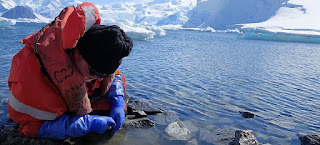
Studying a unique marine environment such as the one around the West Antarctic Peninsula is best achieved by getting wet and underwater. I had quite a 'throwback' to my first diving experiences in the tropical waters of Tanzania which were a breeze in comparison to the level of preparation required to dive in Antarctica. In the tropics, it was easy to rapidly assemble our gear outside, sling it over our shoulder and walk a few hundred metres to a sandy beach where we would pile onto a small wooden boat. Diving operations in the polar regions are quite the contrary and are indeed a fascinating process.  My first dives in Tanzania First, the water temperature. Antarctica is a relatively thermally stable region, experiencing temperatures ranging from -1.8  °C  in winter (the temperature at which salt water freezes) to heights of +2 °C  in the summer. I am amazed to learn about the first divers in Antarctic regions who braved the cold in 10mm rubber w...

Planes On Fire

Image
Through various training courses over the past weeks, I have gradually understood what it means to be a 'Jack of all trades' (but hopefully not a master of none...) whilst living and working at Rothera Research Station. This is certainly not a regular 9-5 job! In addition to conducting marine biology related research in an extreme environment, I will have the responsibility for the safety of not only my colleagues but also passengers that will be transiting through Rothera, landing on the runway and refueling before taking off again into the deep field.  Whilst on station, we will rotate shifts in order that at least two people will effectively take on the role of the fire brigade! If a plane catches fire on landing, it's important that staff are sufficiently trained in order to respond quickly and efficiently to the incident. The first step will be to control the fire externally (most commonly, an aeroplane engine fire), once this is achieved, the next step will be to ext...

Breaking The Ice

Image
It felt like Christmas receiving a kit bag full of equipment suited for polar conditions and rather amusing prancing around in a bright orange hard hat. As British Antarctic Survey (BAS) employees, we are supplied with gear for all seasons and activities ranging from technical mountain clothing, to highly insulated visibility jackets, to boiler suits for greasy work, to steel toe cap shoes. The best gift was the sturdy snow boats with removable thermal insides- to dry separately when wet. I looked at all this unfamiliar kit and projected myself to the end of my time at Rothera Research Station, when I would have to pack away all this gear and return it to the clothing store. I envisaged all the stories that would be attached to each item. I heard that the water bottles can easily be confused with the pee bottles and therefore correct labelling is paramount! Wintering staff members are each provided with a sizeable black crate to fill with personal possessions that will provide entertai...

Surviving At Sea

Image
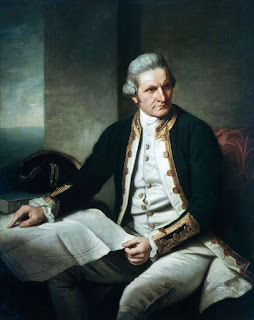
This is a particularly unusual year for those travelling to Antarctica. The Covid restrictions have meant that air travel via the Falklands, Punta Arenas and Cape Town (followed by either further air travel or boat passage to the Antarctic continent) will not be possible. To combat this, ~ 60 British Antarctic Survey (BAS) staff and the ship's crew will spend two months aboard the James Clark Ross (JCR); named after a 19th century British polar explorer. This is extra special as this will be the JCR's final journey with BAS. Personally, I am looking forward to this more 'old school' explorer mode of travelling South and what a way to celebrate the 200 year anniversary of the Antarctic continent being sighted (it's still subject to debate whether this first sighting of Antarctica was attributed to a Russian expedition or a British one only a handful of days later). For those of you who don't know, the British Antarctic Survey has five research stations in Antarct...

A Tribute

Image
Studying Marine Biology has opened so many doors in the way of pursuing a career I am wholly excited about. During my first year at Plymouth University, one of our professors, John Spicer, gave an incredibly vivid and interesting talk about his research on the physiology of Antarctic Amphipods. He filled his presentation with photos and detailed stories about life on a research base which completely captivated me. I remember rushing home to begin a search about what I would need to do to be a scientist at the British Antarctic Survey (BAS).  I later met Marlon Clark in my second year of university whilst diving for the Community Seagrass Initiative project (led by an incredibly patient and caring Mark Parry). Little did I know Marlon was soon to become my role model as he later went on to being selected for the Marine Assistant position with BAS immediately after his bachelors. My dream for working in Antarctica suddenly seemed achievable. I became increasingly fixated by the white...